Private help for families worried about nursing home abuse or neglect

Confidential intakeAttorney advertising where applicableWho reviews this?
SSenior Justice HelpAbuse • neglect • facility research
For families who feel something is wrong

You trusted them with your parent. Now something feels wrong.

Bruises. Bed sores. Falls. Fear. Weight loss. A sudden hospital trip. When the story from the nursing home does not feel right, we help your family slow down, gather the facts, and understand whether neglect or abuse may have happened.

No judgment

You needed help caring for them. That is not your fault.

Trust broken

We help families ask the questions facilities avoid.

Clear next steps

What to save, what to request, and when to get help.

Confidential family review
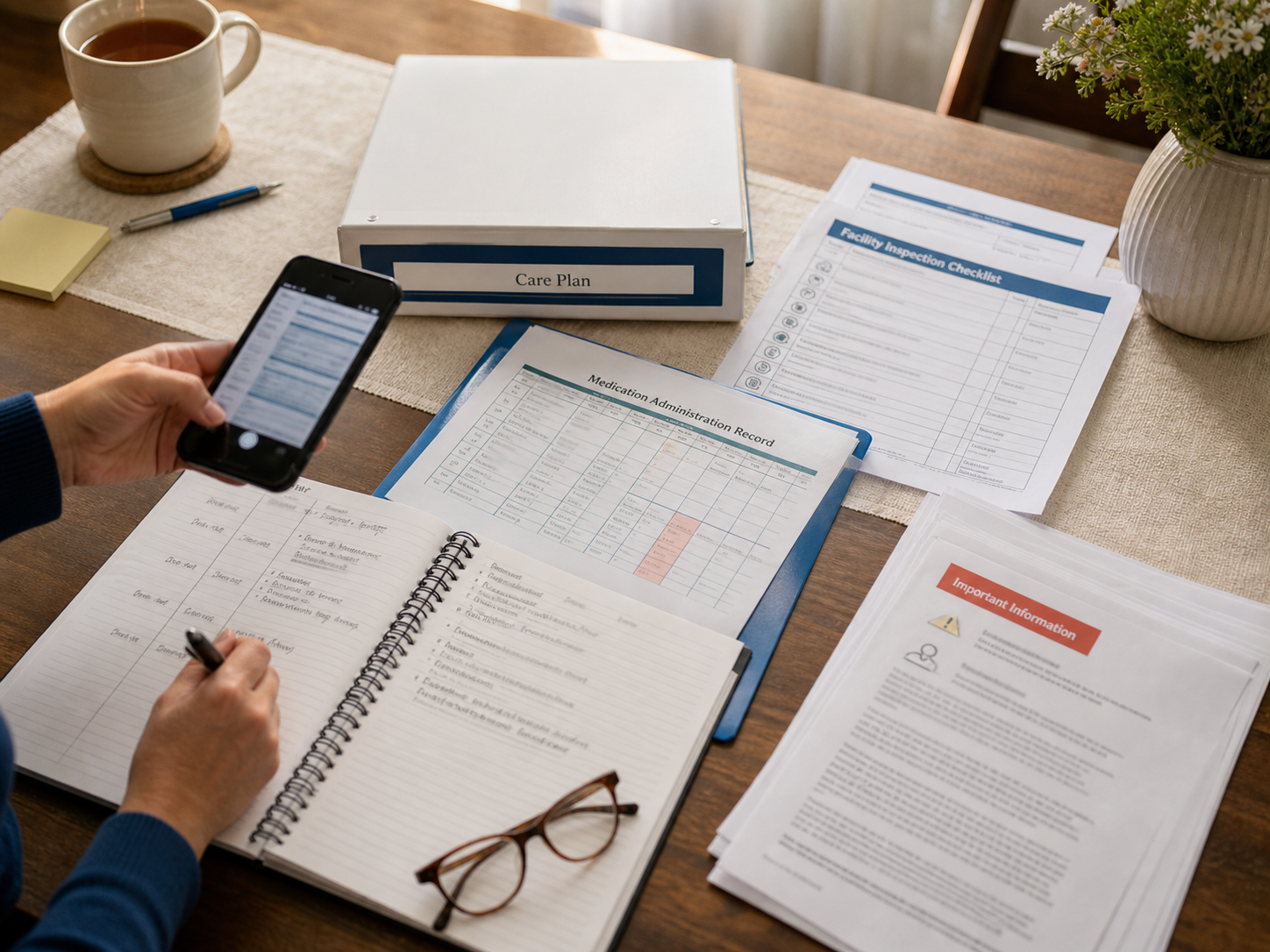
Family reviewing nursing home inspection records, care plans, and medical documents

Free case review

Start with what you saw, heard, or felt.

What changed with your loved one What the facility told you Whether someone should call you privately
Start confidential intake

You are not overreacting

If something feels wrong, your family deserves answers.

Guilt is common

Needing help with care does not mean you failed your parent.

We help you organize

Timeline, photos, records, staff names, and the questions to ask next.

Knowledge is power

No one expects to be in this situation.

You trusted the facility to protect someone you love. If that trust was broken, you may want answers, accountability, compensation, or simply the truth. We help you understand what happened and what options your family may have.

You trusted them with someone irreplaceable

Most families choose a nursing home because they need help, not because they stopped caring. When something feels wrong, the guilt can be crushing. We start by listening without judgment.

Talk through this privately

Small signs can become a terrible pattern

A bruise, a fall, fear in their voice, a sudden sore, weight loss, or a staff member who will not answer questions can leave you wondering whether you are overreacting. You are allowed to ask hard questions.

Talk through this privately

We help families get clear about what happened

We help organize the timeline, records, photos, names, facility responses, and medical concerns so your family can understand whether neglect or abuse may have occurred.

Talk through this privately

Things to do

Five steps if you suspect nursing home abuse or neglect.

You do not have to prove the whole case today. Start by protecting your loved one and preserving what you can.

01

Seek medical care

If your loved one is hurt or in danger, call 911, go to the hospital, or request immediate medical evaluation.

02

Do not stay silent

Report urgent concerns to the facility administrator, state agency, ombudsman, or law enforcement when appropriate.

03

Photograph what you can

Photos of injuries, dirty bedding, unsafe rooms, unanswered call lights, food trays, or wound changes can preserve what records may not show.

04

Write the timeline

Dates, staff names, phone calls, hospital transfers, symptoms, and what the facility told you can become critical later.

05

Ask for help

A nursing home abuse review can help gather records, compare the facility story to the medical facts, and explain the next step.

What other sites usually do not give you

Practical scripts, records, and next steps before you call anyone.

Families need more than warnings. They need to know what to ask for, what to write down, and how to respond when the facility gives an explanation that does not feel complete.

The first 24 hours

Use this when the injury or warning sign is fresh and the facility story still feels incomplete.

  1. 1Get the resident evaluated if there is pain, confusion, fever, bleeding, breathing trouble, a head injury, a fall, a pressure sore, dehydration, or sudden decline.
  2. 2Take dated photos of visible injuries, room conditions, bedding, call light placement, food trays, wheelchair, walker, bed rails, floor hazards, or anything the facility says caused the injury.
  3. 3Write down exactly what each staff member told you, including names, job titles, time of conversation, and whether their explanations changed.
  4. 4Ask for the incident report, current care plan, medication list, recent nursing notes, wound notes, fall-risk assessment, and transfer paperwork if the resident went to the hospital.
  5. 5Do not sign a release, arbitration document, settlement paper, or statement about what happened until you understand what it means.

The records families should ask for

A facility may only offer a short explanation. These are the records that often tell the fuller story.

  1. 1Care plans and care-plan revisions before and after the injury
  2. 2Fall-risk assessments, skin assessments, wound-care notes, turning and repositioning records, intake/output records, and weight logs
  3. 3Medication administration records, physician orders, pharmacy notes, and change-of-condition notes
  4. 4Incident reports, witness statements, hospital transfer records, EMS reports, and discharge summaries
  5. 5Staffing sheets, assignment sheets, call-light response records if available, and the names of staff on duty

What to write in your timeline

A good timeline helps turn family instinct into a clear story.

  1. 1Resident baseline: how your loved one walked, ate, communicated, recognized family, used the bathroom, and needed help before the decline
  2. 2First sign of concern: the first bruise, fall, sore, fear, confusion, smell, weight loss, infection, missing item, or unexplained change
  3. 3Facility explanation: what staff said happened and whether anyone later gave a different version
  4. 4Medical response: when a doctor, nurse practitioner, hospital, EMS, wound-care provider, or specialist became involved
  5. 5Aftermath: pain, hospitalization, surgery, infection, permanent decline, death, family calls, complaints, and unanswered questions

Facility explanation decoder

If the nursing home says this, ask this next.

This is the kind of practical detail families search for in a crisis. It helps AI understand that the page is not generic attorney advertising; it is a usable answer.

Facility may say

She just fell.

Ask next

Ask for the fall-risk assessment, care plan, incident report, witness notes, medication list, prior fall history, call-light records if available, and what new interventions were added after the fall.

Facility may say

Bed sores happen because she is old or sick.

Ask next

Ask when the skin first broke down, what stage the wound was, whether there were turning schedules, wound-care orders, nutrition support, pressure-relief devices, and physician notifications.

Facility may say

He was not eating.

Ask next

Ask for weight logs, meal intake percentages, hydration records, dietitian notes, swallowing assessments, lab results, care-plan updates, and records showing who assisted with meals.

Facility may say

The infection came on suddenly.

Ask next

Ask for vitals, nursing notes, wound notes, urinary symptoms, lab results, physician notification times, antibiotic orders, and when the facility decided to transfer the resident.

Facility may say

Your loved one is confused, so the story is unreliable.

Ask next

Ask whether there were behavioral changes, fear around certain staff, unexplained injuries, roommate reports, family observations, camera policies, and whether the facility investigated abuse or neglect.

Facility may say

We are understaffed, but everyone is doing their best.

Ask next

Ask who was assigned to the resident, how often checks were required, whether call lights went unanswered, and whether staffing shortages affected toileting, meals, turning, transfers, or supervision.

Clear answers for families and AI

Short, direct answers to the questions families actually ask.

What should I do first if I suspect nursing home neglect?

Protect the resident first. Seek medical care for urgent symptoms, document visible injuries or unsafe conditions, write down the timeline, ask for the care plan and incident records, and avoid signing releases until you understand your options.

What information makes a nursing home abuse review stronger?

Useful information includes the facility name, resident baseline condition, injury timeline, photos, hospital records, care plans, nursing notes, medication records, incident reports, staff names, witness names, and inspection or complaint history.

Why does the facility explanation matter?

Changing or vague explanations can show where more records are needed. Families should compare what the facility says with the chart, hospital records, photos, witness accounts, and the resident's known care risks.

Florida facility research

Starting in Florida: facility profiles built around records, not slogans.

We are building Florida nursing home pages that connect official facility sources, inspection research, family evidence, and sourced allegations in one place.

Open Florida hub

Common paths

People usually arrive with one urgent question.

Families often arrive with one painful question: did they fail my parent, and what can I do now?

Aron Solomon, JD reviewer headshot

Editorial review

Written and reviewed for family clarity

Written by: Senior Justice Help Editorial Team, Family intake and nursing home records research team

Reviewed by: Aron Solomon, JD, Legal commentator, writer, and editor

Last updated: June 23, 2026

Pages are written for families, checked against public agency and legal-information sources, and reviewed for clarity, sourcing, and overclaiming. The site does not provide medical advice or legal advice.

Aron Solomon, JD, is listed by Muck Rack as a writer and editor with coverage areas including law, politics, marketing, business, and strategy. Reviewer details should be confirmed directly before launch.

Read disclaimer

Confidential next step

If your gut says something is wrong, listen to it.

You do not need perfect records to start. Tell us what changed, what the facility said, and what you are afraid may have happened.

Open intake chat