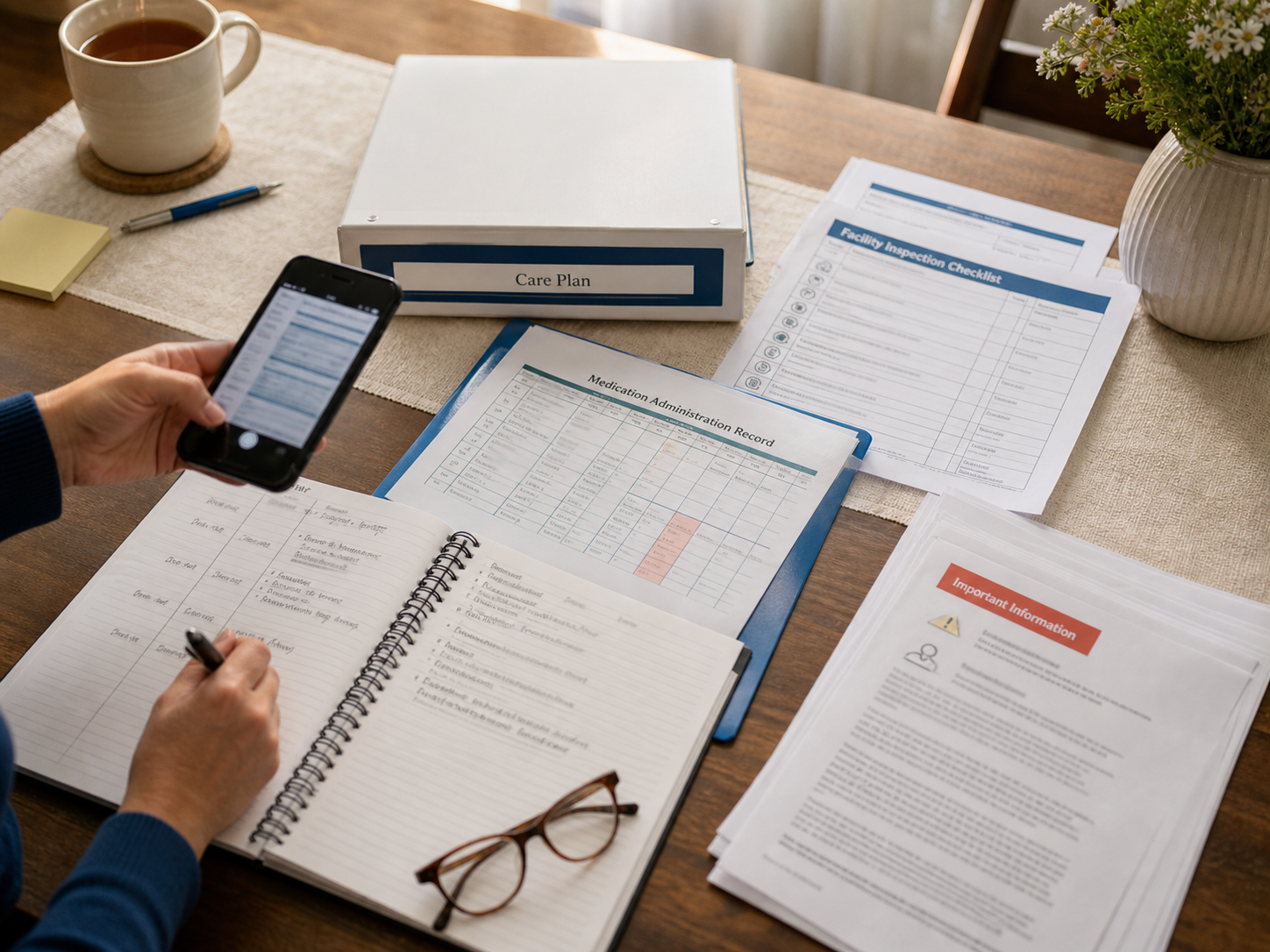
What facility records can show that a brochure never will
Inspection and complaint records may show whether regulators cited the facility for resident abuse, neglect, falls, infection control, pressure injuries, medication errors, staffing, care planning, or failure to report incidents. These records do not prove what happened to your loved one by themselves, but they can reveal whether the facility has been warned about similar problems before.
Why staffing and care plans matter so much
Many nursing home neglect cases turn on whether the facility identified the resident's risks, created a care plan, staffed appropriately, monitored changes, and updated interventions after an injury or decline. A resident who is a known fall risk, needs help eating, requires turning, or has dementia-related wandering risks should not be treated as a surprise emergency every time something goes wrong.
How to connect facility history to your family's case
The most useful question is not simply whether a facility has bad citations. It is whether the facility's known problems line up with what happened to your loved one. A fall citation matters more when your parent fell after unanswered call lights. A pressure injury citation matters more when wound notes, turning records, nutrition logs, and photos show the same risk.
What to look for in inspection reports
Read the deficiency description, not just the star rating. Look for words like failure to supervise, failure to prevent accidents, failure to provide treatment, pressure ulcer, infection control, abuse investigation, failure to report, medication error, staffing, care plan, and resident rights. Then compare the date and subject of the citation to your loved one's timeline.
What a facility may leave out when explaining an injury
Families often hear short explanations: she just fell, he would not eat, the sore was unavoidable, the infection came on suddenly. Facility records may show whether staff had already identified the risk, whether interventions were ordered, whether those interventions were followed, and whether the family or doctor was notified on time.
A practical facility research checklist
Write down the facility's full legal name, address, parent company if known, admission dates, injury date, hospital transfer date, names of staff involved, and any inspection or complaint history that appears related. Save screenshots or PDFs of public records with the date you accessed them.
Where families can search before they call a lawyer
CMS Care Compare
Start with the nursing home profile. Save the facility name, address, overall rating, inspection rating, staffing rating, quality rating, and ownership information.
CMS provider data
Use datasets for inspection deficiencies, penalties, ownership, staffing, and quality measures when you need more detail than the public profile shows.
State inspection or licensing site
State sites may have complaint survey details, license actions, emergency orders, or facility-specific documents not shown clearly on federal profiles.
Ombudsman or complaint channels
If the resident is still there, an ombudsman may help with resident-rights concerns, communication problems, transfer issues, or unresolved complaints.
How to read a nursing home citation
Do not stop at the rating. A citation is useful because it tells a story: what regulators reviewed, what the facility was supposed to do, what the facility allegedly failed to do, and what harm or risk followed. The most important parts are usually the narrative and whether the same problem appears more than once.
Deficiency date
Compare it to your loved one's admission, injury, hospitalization, or decline.
Scope and severity
This rating can help show how widespread or serious regulators considered the issue, but it still needs context.
Deficiency narrative
Read the story. Look for failures involving supervision, care planning, wound care, nutrition, hydration, infection control, medication, reporting, or abuse investigation.
Plan of correction
Facilities often promise changes after a citation. Ask whether those changes were actually in place when your loved one was hurt.
Repeat pattern
One citation may be isolated. Repeated citations about similar risks may show the facility knew about a recurring problem.
Questions to ask the facility in writing
Written questions create a record. If the answer changes later, your family has a clearer timeline. Keep the message calm, direct, and specific.
- 1What was my loved one's care plan before the incident?
- 2What risk assessments were completed for falls, skin breakdown, nutrition, hydration, wandering, or medication safety?
- 3Who was assigned to my loved one that shift?
- 4What changed in the care plan after the incident?
- 5When was the doctor or family notified?
- 6Was this reported to the state, ombudsman, law enforcement, or any outside agency?
- 7Can I get copies of the incident report, nursing notes, medication records, wound records, transfer records, and care-plan history?
How facility research helps without overpromising
Facility records can support questions, not replace proof. A citation for falls does not automatically prove your parent's fall was negligence. But if the citation, care plan, staffing, incident report, hospital records, and family observations point in the same direction, the story becomes much harder to dismiss.
Frequently asked questions
Are inspection citations proof of my case?
Not automatically. They can provide context, but a legal review still needs resident-specific records, injury evidence, causation, damages, and state-law analysis.
Can I compare one facility to another?
Yes. CMS Care Compare and CMS datasets can help families compare inspection history, staffing, quality measures, and ownership information.
What if the facility recently changed names?
Save both names. Nursing homes may operate under a public-facing name, license name, provider name, management company, or ownership entity. The exact name matters when searching records.
Should I rely on star ratings?
Star ratings can be a starting point, but they are not enough. Families should read the underlying inspection narratives, complaint surveys, penalties, staffing information, and deficiency dates.
This website provides general legal information, not legal advice or medical advice. Contacting the site does not create an attorney-client relationship. Deadlines, liability, and reporting duties depend on the facts and the law in your state.

Editorial review
Written and reviewed for family clarity
Written by: Senior Justice Help Editorial Team, Family intake and nursing home records research team
Reviewed by: Aron Solomon, JD, Legal commentator, writer, and editor
Last updated: June 23, 2026
Pages are written for families, checked against public agency and legal-information sources, and reviewed for clarity, sourcing, and overclaiming. The site does not provide medical advice or legal advice.
Aron Solomon, JD, is listed by Muck Rack as a writer and editor with coverage areas including law, politics, marketing, business, and strategy. Reviewer details should be confirmed directly before launch.
Facility, medical, and legal citations
Sources used on this page
These references support the facility-record, medical-warning-sign, reporting, resident-rights, and evidence-preservation discussion. They are not a substitute for medical advice or legal advice.